The Most Common Mistake After an Ankle Sprain
Fzt. Aydın Ali · 15 Haziran 2026 · 2 dk okuma
Fzt. Aydın Ali · 15 Haziran 2026 · 2 dk okuma
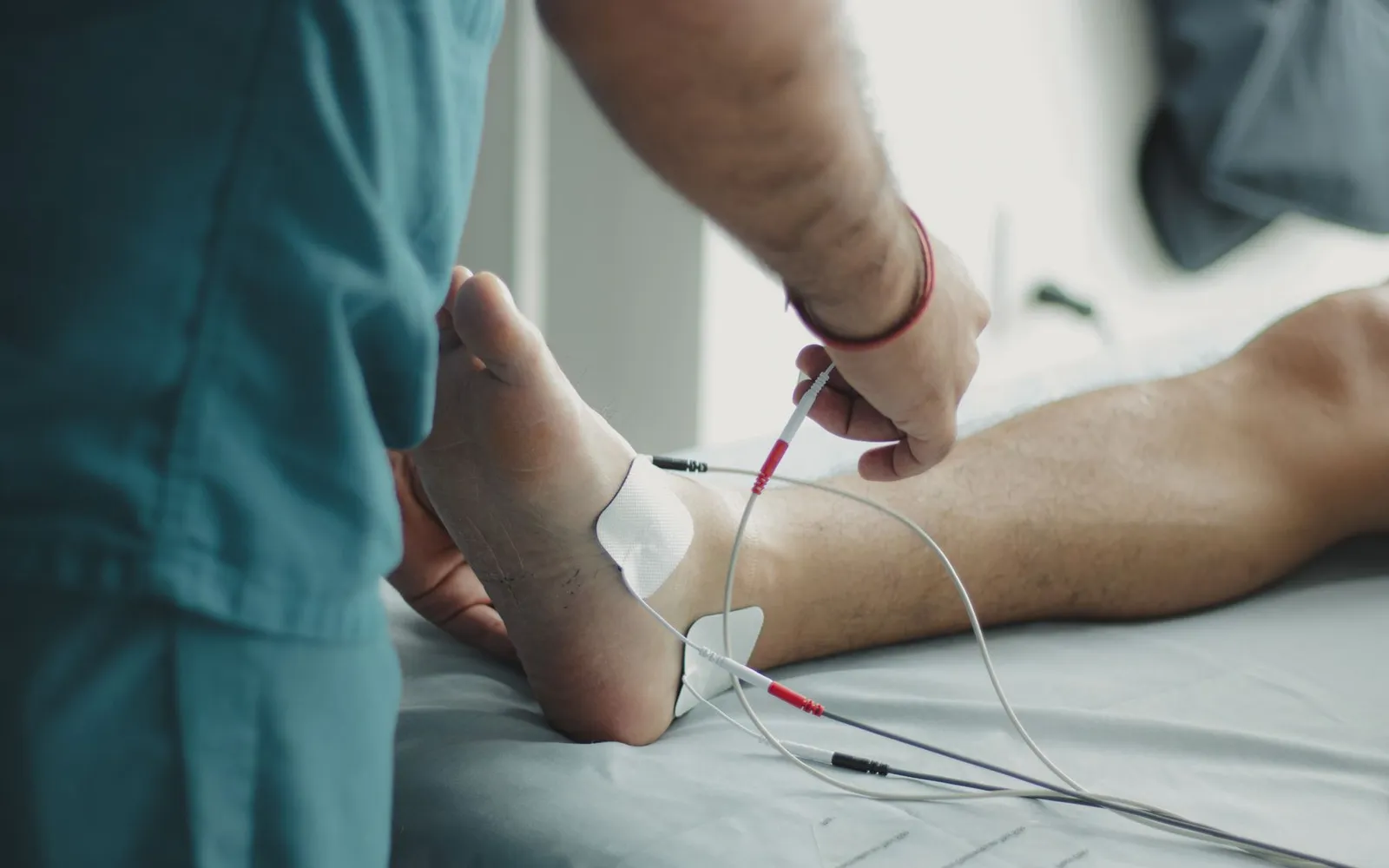
The swelling went down, the pain went away, life moved on. That is exactly the problem: treatment is usually left half done, and the same ankle sprains again and again.
An ankle sprain is one of the most common musculoskeletal injuries and is usually brushed aside with "it will settle". And indeed pain and swelling do reduce within a few weeks. The problem starts afterwards: once sprained, an ankle becomes markedly more prone to spraining again.
Inside ligament tissue are sensory receptors that tell the brain what angle the joint is at. A sprain damages those receptors as well.
Even when the pain has gone, if that sensory system has not returned to its previous sensitivity the ankle cannot react in time on unexpected ground, and the same injury repeats. This is called functional instability.
The typical course runs like this: ice, rest, a few days of strapping, back to normal life once pain settles. That approach resolves the pain but does not restore the sense of balance or the strength.
A complete rehabilitation includes:
The fourth step is the one most often skipped and the one that matters most in preventing recurrence.
It can provide support in the early stage and during the return to sport. But a brace is not the lasting solution; relying on constant external support can delay the development of the ankle's own control.
If you cannot put weight on the foot after the injury, or there is obvious deformity or point tenderness over bone, an assessment for fracture is needed.
Basic rehabilitation after a simple sprain takes a few weeks; the balance and strength component should be continued for longer. As important as the duration is that the decision to return is based on measurement: single-leg balance time and strength are compared with the other side.
If you have recurrent sprains or a feeling of insecurity in the ankle, you can book an assessment with Fzt. Aydın Ali.
Omurga Sağlığı
Not every back pain is a disc herniation, and not every herniation needs surgery. How to tell the symptoms apart and when to seek help.
11 Ağustos 2026 · 2 min read

Omurga Sağlığı
Every 2.5 cm your head moves forward roughly doubles the load your neck muscles carry. The real cause of neck pain in office workers — and what helps.
8 Ağustos 2026 · 2 min read
Ağrı ve Yaşam Kalitesi
This is the question we are asked most. The short answer: at the right dose it reduces pain rather than increasing it. The long answer lies in how that dose is set.
5 Ağustos 2026 · 2 min read