
Does Kinesio Taping Actually Work?
Fzt. Aydın Ali · 9 Haziran 2026 · 2 dk okuma
Fzt. Aydın Ali · 9 Haziran 2026 · 2 dk okuma
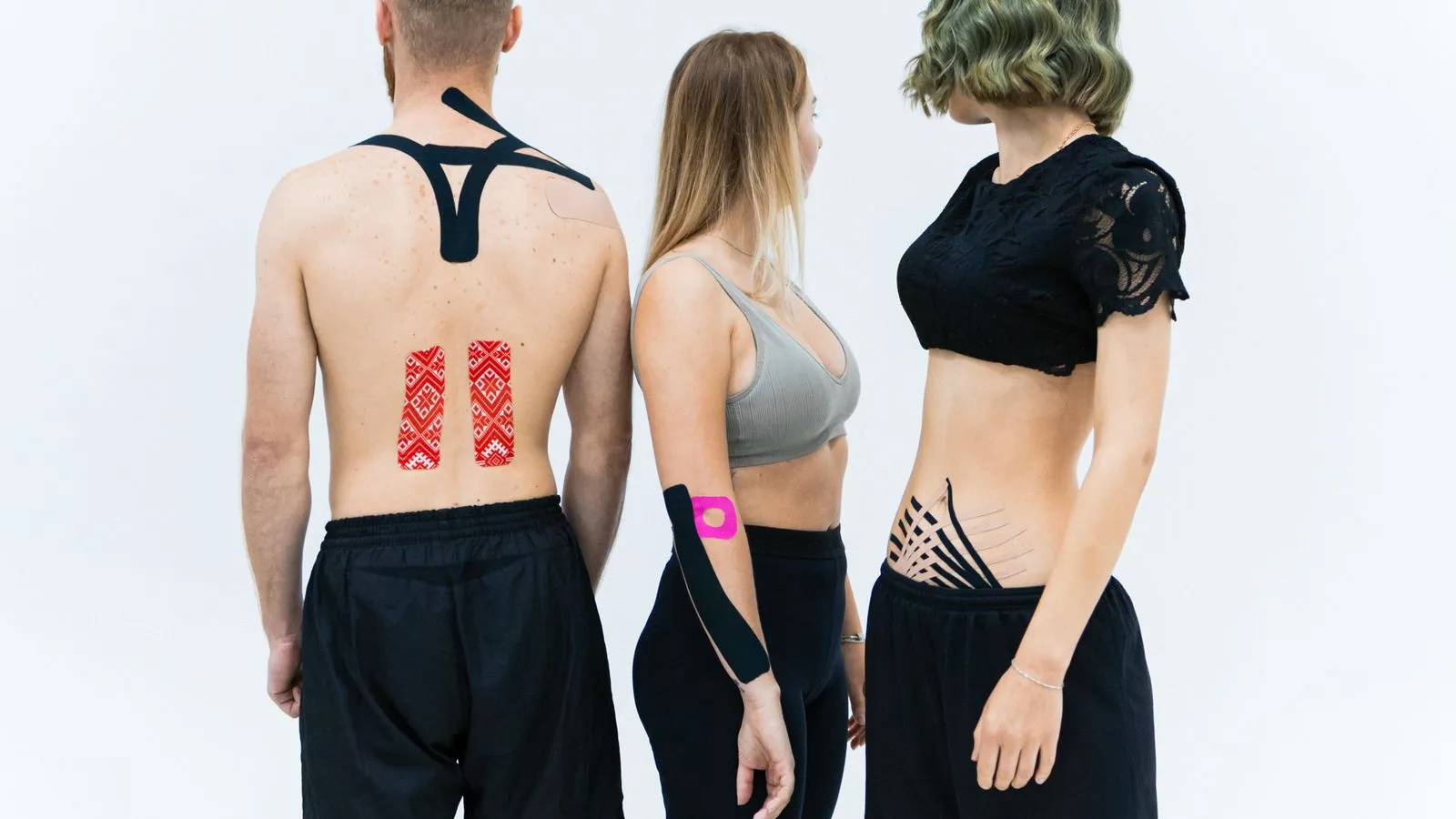
What those coloured tapes do — and do not do — is widely confused. What the evidence says is more measured than the advertising.
The coloured tapes on athletes have become a familiar sight in recent years. Expectations about what they do, however, are often inflated.
Kinesio tape is an elastic tape applied to the skin. The evidence we have points to its most consistent effect being on pain perception and movement awareness. The stretch applied to the skin changes the sensory feedback from that area; people use the region more freely and avoid moving it less.
That is not a small thing. Avoiding movement because of pain is one of the most common reasons recovery stalls.
Taping is a supporting part of a programme. Places where it genuinely fits:
Its effect depends on application: direction, degree of stretch and skin preparation all change the result. Taping applied at home from an internet picture is usually ineffective and sometimes irritates the skin.
Tape usually stays on for three to five days and is water-resistant. If itching, redness or burning appears it should be removed at once.
Think of tape as a facilitator, not a treatment. It does not replace exercise; it makes exercise possible. At the centre of the programme there is always graded loading — the tape is a small helper around that centre.
If taping is offered on its own as a "treatment package", you are right to ask questions.
Fzt. Aydın Ali uses taping only where it is needed, and always inside an exercise programme.
Omurga Sağlığı
Not every back pain is a disc herniation, and not every herniation needs surgery. How to tell the symptoms apart and when to seek help.
11 Ağustos 2026 · 2 min read

Omurga Sağlığı
Every 2.5 cm your head moves forward roughly doubles the load your neck muscles carry. The real cause of neck pain in office workers — and what helps.
8 Ağustos 2026 · 2 min read
Ağrı ve Yaşam Kalitesi
This is the question we are asked most. The short answer: at the right dose it reduces pain rather than increasing it. The long answer lies in how that dose is set.
5 Ağustos 2026 · 2 min read