Skip to content
Fzt. Aydın AliFizyoterapi & Rehabilitasyon

TMJ (Jaw Joint) Treatment and Atlas Therapy

The temporomandibular joint (TMJ) connects the jaw to the skull and works thousands of times a day. Problems here rarely stay in the jaw: headaches, ringing in the ears and neck and shoulder tension often come with them. Fzt. Aydın Ali assesses the jaw together with the upper cervical vertebrae — particularly the atlas — and the neck muscles.

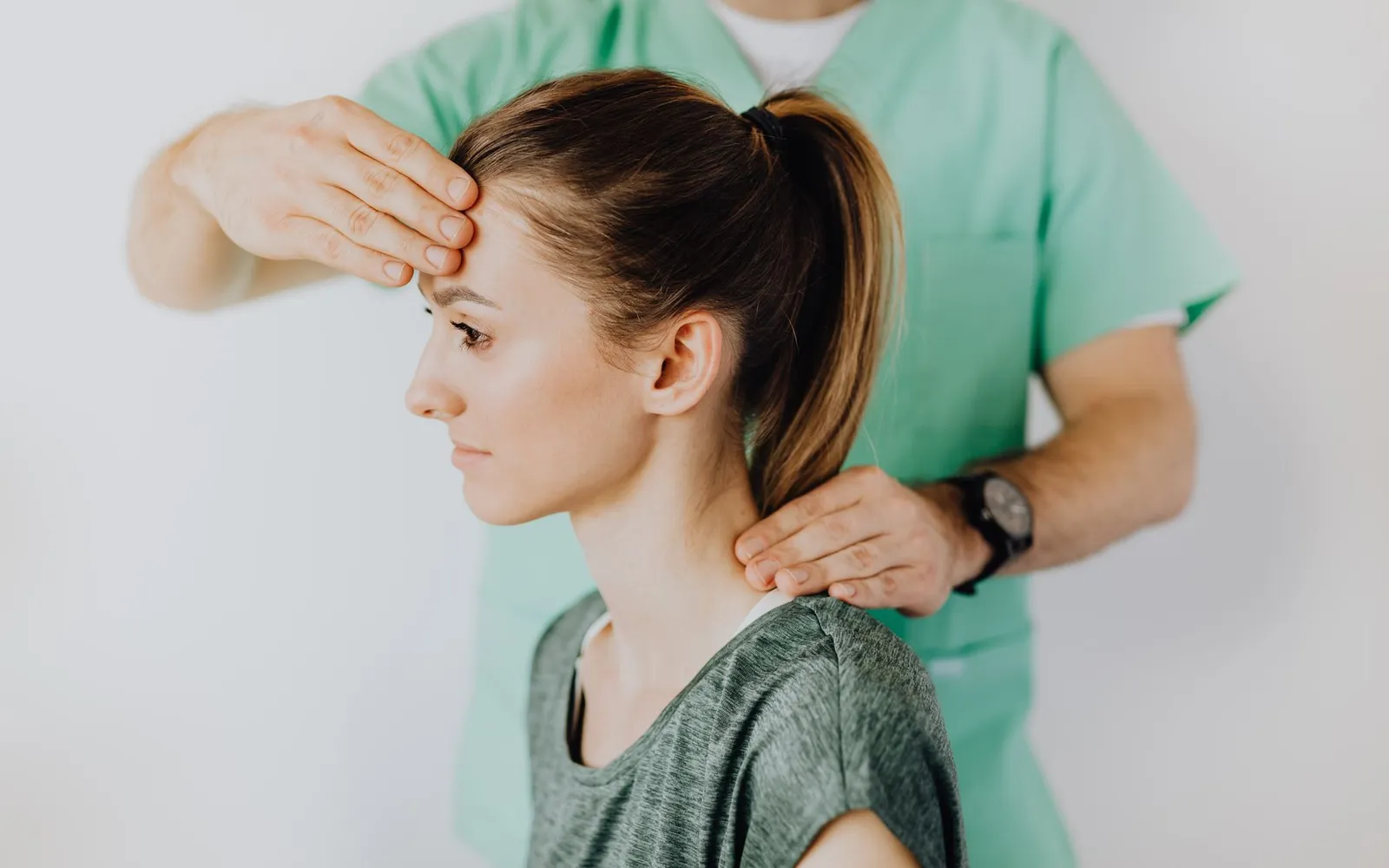
Manual therapy applied to the head, neck and jaw region

When is it needed?

  • Clicking or popping when opening or closing the mouth
  • Jaw locking; being unable to open or close fully
  • Pain around the jaw joint and temple
  • Jaw fatigue that is worst in the morning (night-time grinding)
  • Headache spreading from the temple
  • Fullness, pressure or ringing in the ear
  • Difficulty chewing, chewing on one side only
  • Accompanying tension in the neck and upper back

What we do

  • Assessment of jaw range, opening path and chewing muscles
  • Examination of the upper cervical segments (C0-C1-C2 / atlas)
  • Manual therapy and trigger point work for the chewing muscles
  • Atlas therapy: gentle manual techniques for the upper neck
  • Intraoral techniques where indicated
  • Jaw control and movement pattern exercises
  • Posture correction and deep neck muscle strengthening
  • Awareness of clenching, relaxation and daily habit changes

Why atlas therapy is part of TMJ treatment

The atlas is the topmost vertebra of the spine and carries the skull. The muscles and joints in this region share a nerve supply with the jaw joint, so tension in one directly affects the other. With the head held forward, the resting position of the lower jaw changes and load on the joint increases.

The programme therefore does not treat the jaw alone. Atlas therapy uses gentle manual techniques on the upper neck to reduce tension there and rebalance the head-neck-jaw relationship. It is not a forceful manipulation; it is controlled and stays within your tolerance.

Working with your dentist

Tooth alignment, missing teeth, a high filling and night guards can all be decisive factors. Those belong to your dentist or oral surgeon; physiotherapy complements that work rather than replacing it.

If you use a night guard, bring it to the assessment. Physiotherapy gives the best result when it runs alongside the treatment your dentist has planned.

How the process works

In the first session jaw movement is measured (mouth opening recorded in millimetres), deviations in the opening path are observed, and the chewing muscles and upper neck are examined by hand. If there is headache or an ear complaint, its relationship to the jaw is assessed separately.

The programme usually begins by reducing pain and muscle tension, then moves to movement control and posture work. Adjusting daily habits — avoiding tooth contact, stopping one-sided chewing, the phone-to-shoulder habit — is what makes the result last.

Frequently asked questions

Is the clicking in my jaw dangerous?

A painless click on its own does not always mean a problem and is quite common. If pain, locking or reduced opening comes with it, an assessment is advised.

Is atlas therapy painful?

No. It consists of gentle, controlled techniques applied to the upper neck; it is not a forceful manipulation. Your tolerance is monitored throughout.

Should I see my dentist or a physiotherapist?

They are not alternatives. Tooth alignment, night guards and dental factors are your dentist's field; muscle, joint movement and the neck relationship are physiotherapy's. The best results come from both working together.

How many sessions does it take?

It varies with how long you have had the problem and what else is contributing. Measurements are taken at the first assessment and a plan is drawn up for you.

Other treatments

  • Herniated Disc

    An exercise-based, one-to-one physiotherapy programme for back pain and pain radiating into the leg.

  • Neck Herniation

    A programme focused on posture and the deep neck muscles for pain spreading into the neck, shoulder and arm.

  • Scoliosis

    Curve-specific exercise and regular monitoring for spinal curvature and postural problems.

TMJ & Atlas Therapy için randevu alın

The appointment form does not ask for health information; details are discussed by phone.

Book an appointment