Skip to content
Fzt. Aydın AliFizyoterapi & Rehabilitasyon

Neurological Rehabilitation

The nervous system can form new connections after damage; this is called neuroplasticity. Neurological rehabilitation rests on exactly that: well-chosen, sufficiently repeated and meaningful tasks allow part of a lost function to be regained. Fzt. Aydın Ali defines the goal in terms of independence in daily life.

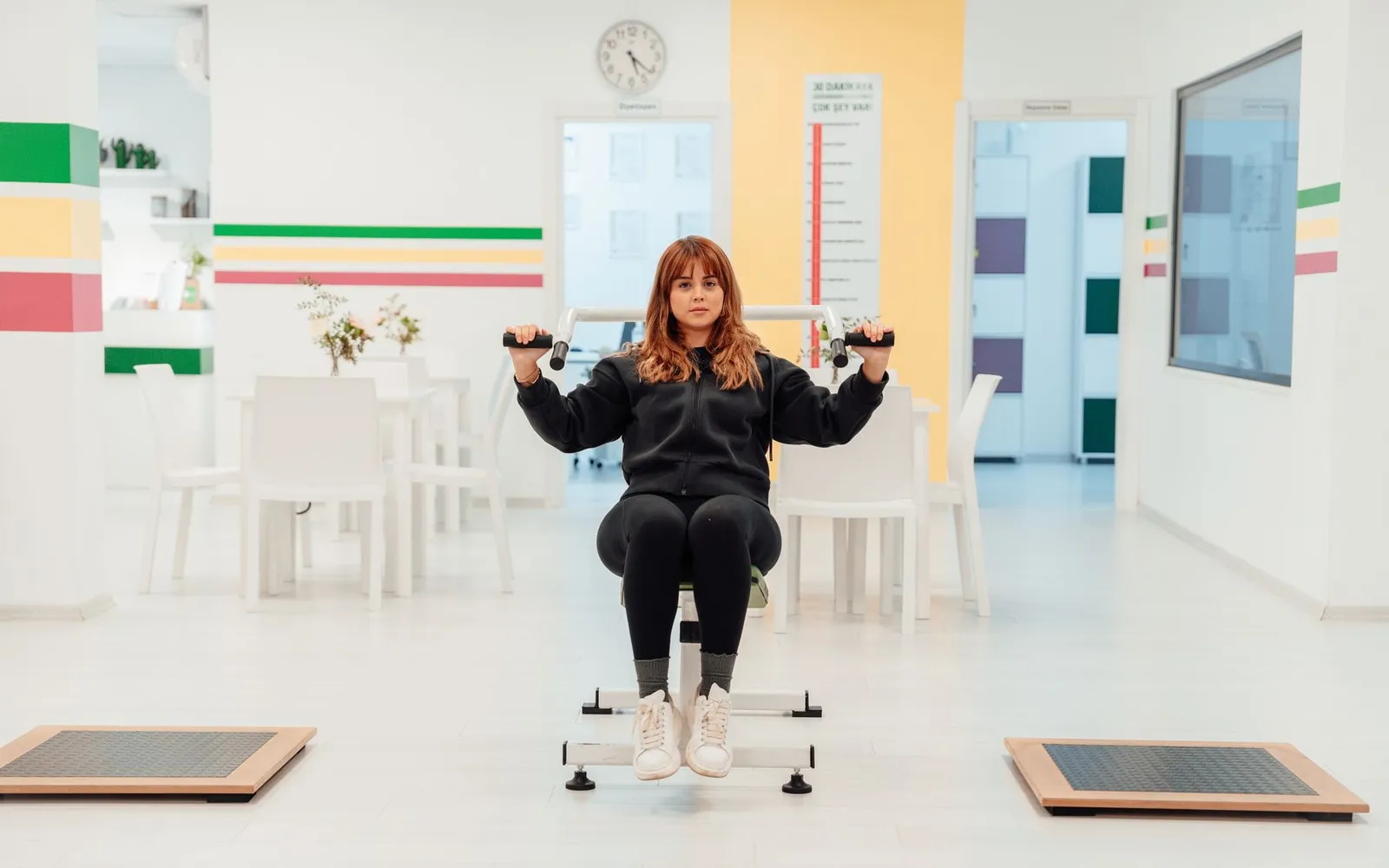
Seated strength and balance work in the rehabilitation room

When is it needed?

  • Loss of strength in an arm or leg after a stroke
  • Difficulty walking, fear of falling, loss of balance
  • Increased muscle tone (spasticity) and joint restriction
  • Fatigue, balance and coordination problems in MS
  • Slowing, freezing and postural change in Parkinson's
  • Dependence in daily tasks after brain or spinal cord injury

What we do

  • Neurological assessment: tone, balance, gait and functional independence
  • Task-specific training with high repetition
  • Gait training and guidance on walking aids where needed
  • Balance and falls-prevention work
  • Spasticity management, stretching and joint range maintenance
  • Strengthening of remaining muscle and endurance work
  • Home programme and handling training for the carer

Why repetition matters so much

Neuroplasticity works when the same movement is repeated many times in a meaningful context. What is done at home therefore matters as much as what is done in the session, which makes involving a family member a requirement rather than a preference.

Goals are concrete daily tasks rather than abstract ones: sitting up from bed unaided, holding a cup, walking to the door without help. Each time a goal is met the programme moves up a step.

How long does it take?

Neurological rehabilitation is a long process and the rate of recovery varies considerably from person to person. Programmes that start early, continue regularly and have clear goals generally produce better results.

Throughout, we work alongside your neurologist; decisions about medication and medical treatment belong to your doctor.

Frequently asked questions

How soon after a stroke should rehabilitation start?

The general approach is to begin as soon as the medical situation is stable. The early period is valuable, but gains are still possible in cases where time has passed.

Is a home programme provided?

Yes. It is an inseparable part of the process, demonstrated to the carer in person and also handed over in writing.

Does exercise increase fatigue in MS and Parkinson's?

Not when the dose is right; the effect on endurance and daily capacity has been shown to be positive. The programme is planned around your fatigue level.

Other treatments

  • Herniated Disc

    An exercise-based, one-to-one physiotherapy programme for back pain and pain radiating into the leg.

  • Neck Herniation

    A programme focused on posture and the deep neck muscles for pain spreading into the neck, shoulder and arm.

  • Scoliosis

    Curve-specific exercise and regular monitoring for spinal curvature and postural problems.

Neurological Rehab için randevu alın

The appointment form does not ask for health information; details are discussed by phone.

Book an appointment