
Skip to content
Fzt. Aydın AliFizyoterapi & Rehabilitasyon

Knee Pain and Knee Rehabilitation

The knee is one of the most heavily loaded joints in the body, and the source of pain is often not the knee itself but a movement chain that includes the hip and the ankle. Fzt. Aydın Ali assesses knee pain by measurement: range of motion, thigh strength front and back, balance and gait are examined together, and the programme is built on those findings.

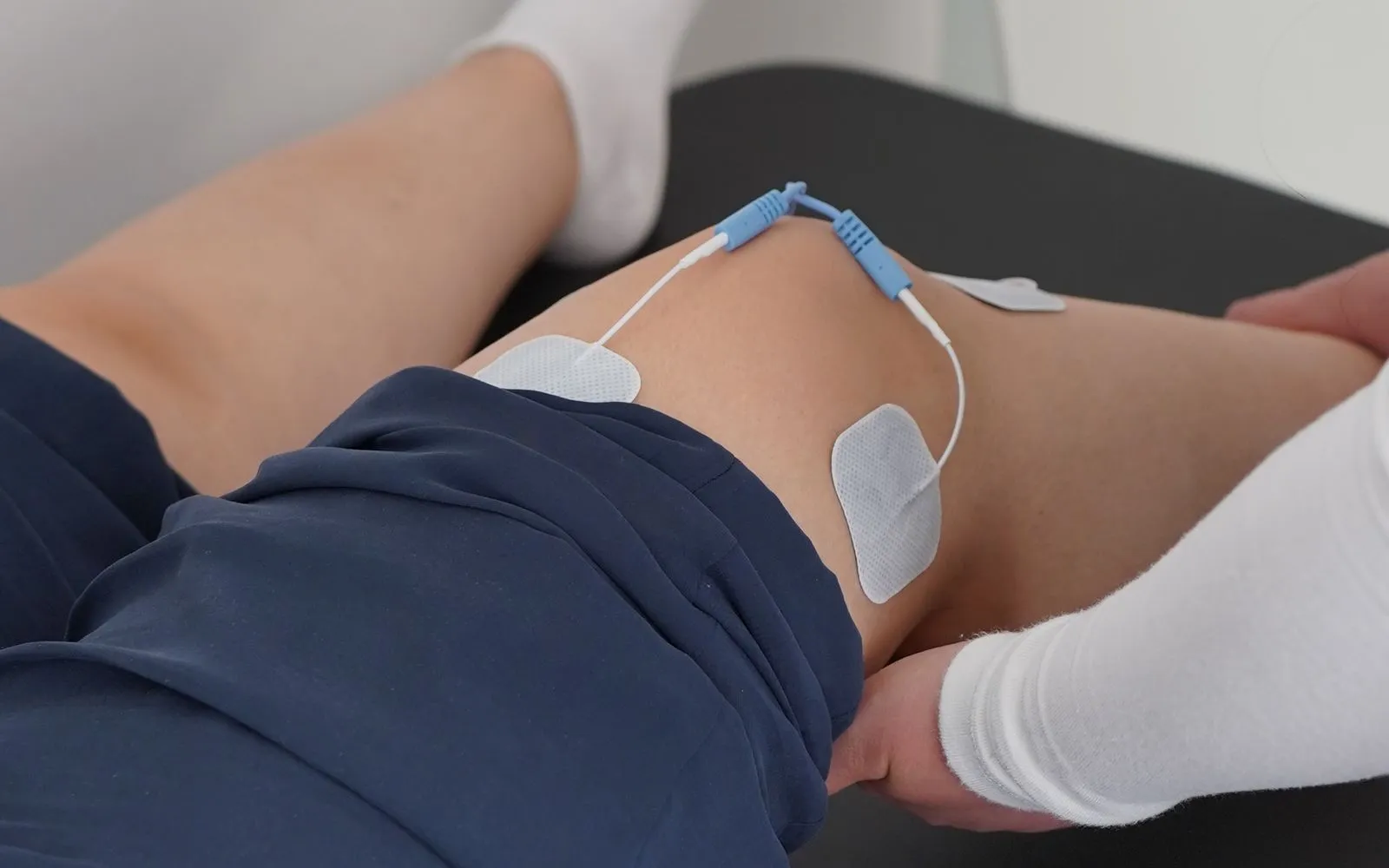
Electrotherapy electrodes being placed around the knee

When is it needed?

  • Knee pain that increases going up or down stairs
  • Stiffness after sitting for a long time
  • Difficulty squatting or kneeling
  • Swelling, giving way or a feeling of instability
  • Loss of strength after meniscus, ligament or replacement surgery
  • Pain at the front of the knee when running

What we do

  • Detailed assessment with range, strength and balance measurements
  • Graded strengthening of the quadriceps and hamstrings
  • Hip and trunk stabilisation — the chain that protects the knee
  • Manual therapy to restore joint mobility
  • Proprioception and balance work
  • Retraining of gait, stairs and squatting patterns
  • Graded loading after surgery in line with the surgeon's protocol

Why looking only at the knee is not enough

Above the knee sits the hip, below it the ankle. Weak hip rotators or a stiff ankle mean the knee takes extra load with every step. The assessment therefore covers the whole lower limb chain, not just the knee.

Pain settling is not a sufficient goal on its own. Returning to activity before strength and control are regained means the problem comes back quickly.

Rehabilitation after surgery

After meniscus repair, ACL reconstruction or knee replacement, rehabilitation follows the loading timetable set by your surgeon. In the early stage, controlling swelling, protecting range and restoring muscle activation come first.

In later weeks the programme moves towards strength, balance and functional movement. Return to sport is planned by measurable criteria, not by elapsed time.

Frequently asked questions

Does a meniscus tear always need surgery?

No. A large proportion of degenerative tears can be managed with an exercise-based programme. Where there are mechanical symptoms such as locking, the decision belongs to your doctor.

When should physiotherapy start after a knee replacement?

Usually within days of the operation. Range of motion lost in the early period directly affects the result months later.

Is it harmful to exercise with knee pain?

Well-chosen exercise protects the knee. The problem is never exercise itself but the wrong movement or dose for that person.

Other treatments

  • Herniated Disc

    An exercise-based, one-to-one physiotherapy programme for back pain and pain radiating into the leg.

  • Neck Herniation

    A programme focused on posture and the deep neck muscles for pain spreading into the neck, shoulder and arm.

  • Scoliosis

    Curve-specific exercise and regular monitoring for spinal curvature and postural problems.

Knee Rehabilitation için randevu alın

The appointment form does not ask for health information; details are discussed by phone.

Book an appointment