Skip to content
Fzt. Aydın AliFizyoterapi & Rehabilitasyon

Ankle Sprain and Rehabilitation

An ankle sprain is one of the most common musculoskeletal injuries and one of the most commonly neglected. When the swelling goes down, healing is not complete: unless the balance sense carried by the ligaments is restored, the risk of spraining it again rises sharply. Fzt. Aydın Ali plans ankle rehabilitation specifically to remove that risk.

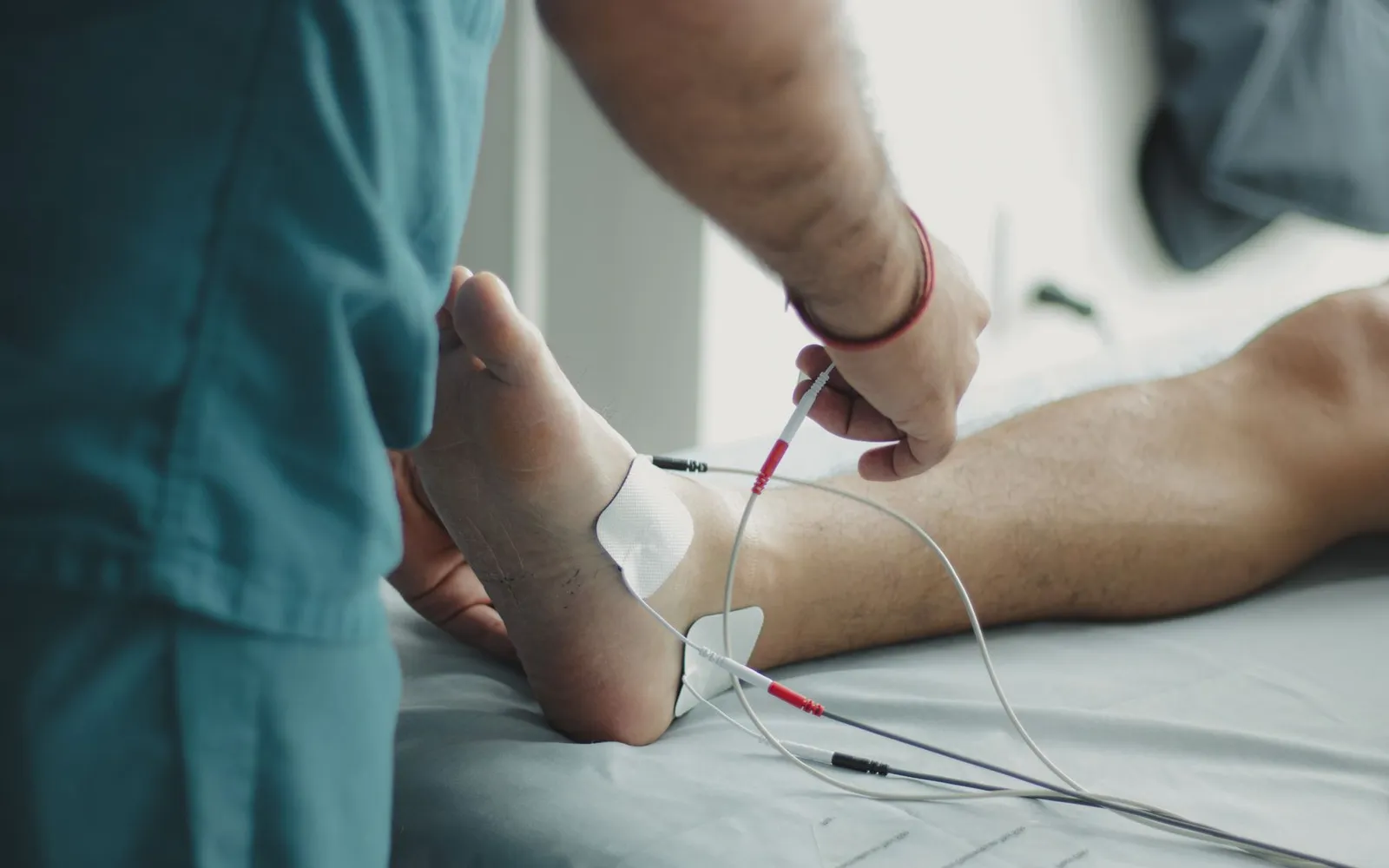
Electrotherapy applied to the ankle

When is it needed?

  • Swelling and pain that persist after a sprain
  • A feeling of giving way, repeated sprains
  • Insecurity or unsteadiness on uneven ground
  • Achilles pain and stiffness, worst in the morning
  • Stabbing pain under the heel on the first steps (plantar fasciitis)
  • Difficulty running or jumping

What we do

  • Swelling and pain control in the early stage
  • Graded restoration of joint range
  • Strengthening of the ankle and calf muscles
  • Proprioception training with balance board and single-leg work
  • Graded (eccentric) loading programme for the Achilles tendon
  • Retraining of walking and running technique
  • Advice on taping and footwear

Why does the same ankle keep spraining?

Inside ligament tissue are sensory receptors that tell the brain what angle the joint is at. A sprain damages those receptors too; even when pain has gone, the joint cannot react in time and the same injury repeats.

The heart of rehabilitation is therefore single-leg balance, unstable-surface work and exercises that improve reaction speed. Skip this part and the treatment is only half done.

Achilles tendon and heel pain

Achilles tendinopathy and plantar fasciitis both settle with rest and return with activity. The current approach is not complete rest but a controlled exercise programme that gradually raises the tendon's capacity to carry load.

Load is increased in measured weekly steps and the response is reviewed at every session.

Frequently asked questions

How long should I rest after a sprain?

Long periods of complete rest are no longer recommended. Once swelling and pain are controlled in the first days, early movement within your pain limit speeds recovery.

Should I use a brace or bandage?

It can help in the early stage and during return to sport. But the lasting solution is strength and balance around the ankle, not the brace.

Does physiotherapy help heel spurs?

The source of pain is usually not the bony spur itself but overload of the plantar fascia. A programme of stretching, strengthening and load management helps in most cases.

Other treatments

  • Herniated Disc

    An exercise-based, one-to-one physiotherapy programme for back pain and pain radiating into the leg.

  • Neck Herniation

    A programme focused on posture and the deep neck muscles for pain spreading into the neck, shoulder and arm.

  • Scoliosis

    Curve-specific exercise and regular monitoring for spinal curvature and postural problems.

Ankle için randevu alın

The appointment form does not ask for health information; details are discussed by phone.

Book an appointment